-
ALL THINGS WORKPLACE | TUESDAY, FEBRUARY 2, 2016
 Coaching: The Four Essentials
What makes coaching successful? Success is often attributed to mutual chemistry, technique, and readiness to learn. agree that those are important ingredients in the process. But in reality, they are steps to achieving results. And that's what we're looking for, right? How do we reach the movement and momentum we want? I was discussing performance management on an HR.COM webinar. Managers are often concerned about how to use performance data to really help employees. . So I started paying attention to what was happening--like watching a movie where you are one of the actors. Clarity.
-
ALL THINGS WORKPLACE | MONDAY, JANUARY 25, 2016
 No One Follows A Tentative Person
Tentative efforts lead to tentative outcomes. Therefore, give yourself fully to your endeavors. Decide to construct your character through excellent actions and determine to pay the price of a worthy goal. The trials you encounter will introduce you to your strengths. Remain steadfast.and one day you will build something that endures, something worthy of your potentia l — Epictetus. . I was standing at the meat counter at the local market and watched a leadership principle unfold before me: Nobody Follows a Tentative Person. But they ran out of numbers. We're not.
-
ALL THINGS WORKPLACE | THURSDAY, DECEMBER 24, 2015
 A Blessed Christmas to You and Your Family
Holiday Thoughts
-
ALL THINGS WORKPLACE | TUESDAY, DECEMBER 15, 2015
You Can Influence: Here's How
Everyone wants to have influence; not everyone wants to build the relationships that enable it. There's a natural flow to being influential. . Influence goes hand in hand with agreements. If you want to persuade someone to take a particular course of action, you need some agreements about what needs to be done and who will do it. That means taking time to reach an understanding about what is important to each of you. And that means building a working relationship. There seems to be a predisposition to what we call "positional bargaining." The loser resents the loss. Steve. Influence Leadershi
-
ALL THINGS WORKPLACE | MONDAY, OCTOBER 19, 2015
 How About "Design" vs. "Work"?
Right now, you are either thinking about or designing an idea, product, service, or process. Yet most of us don't view ourselves as designers. It sounds like a specific, creative field in which we don't have formal education. But we do. Earlier today I sent off a consulting agreement. As I proofread it I realized that 3 of the key elements were "Design': a workshop.learning materials.executive planning session. So I looked over previous proposals and agreements and discovered that "design" is a huge part of my work. admit, I'm a design freak in general. Gotcha! You're You're a designer. .
-
ALL THINGS WORKPLACE | WEDNESDAY, OCTOBER 7, 2015
 Leaders: Beware Comparisons
When we were kids, my younger brother had to put up with teachers comparing the two of us throughout his school years. He was a star athlete, I was more of an academic. He didn't like the comparisons and neither did I. Most of all, the comments did nothing to change either of our lives for the better. To this day, he doesn't care much about "A's" and I still can't kick a field goal. Adults at work hate those kinds of comparisons, too. When Kris was in your job, she always contacted the sales managers to get the monthly updates. think that was a better way than how it's being done now."
-
ALL THINGS WORKPLACE | TUESDAY, SEPTEMBER 29, 2015
 Do You Use Verbal White Space?
Note: I was prompted by the recent political debates to re-publish this popular post from the 2012 archives. Hope you enjoy it! Graphic designers know how to focus your attention. They frequently communicate through the use of white space. Less is more. The message is clear. There's no clutter. Use Verbal Whitespace. You can increase your verbal impact the same way. How many times have you wished that someone would just "say what they mean?". Boss says: "We finished the senior level meeting and it looks as if we have to increase our numbers. You know how much I appreciate your.". When.".
-
ALL THINGS WORKPLACE | MONDAY, SEPTEMBER 14, 2015
 Caution: Invisible Assumptions
When 300 engineers at a major East Coast utility were told to re-apply for jobs in their department as part of a major reorganization, they were livid. I've been here 18 years." (Longevity means immunity to change). "I hired the idiot who's running this thing." (If I gave someone their job, they won't mess with mine). The Danger of The "Invisible Assumed". When you signed on with your current employer you probably discussed: Salary, benefits, corporate vision, the marketplace, performance expectations. It's the ones you assumed to be true that will come back to haunt you. Employees: 1.
-
ALL THINGS WORKPLACE | TUESDAY, SEPTEMBER 1, 2015
 What Are You Paying Attention To?
There's an incongruity between time and money devoted to leadership development and the number of articles about bad bosses. Maybe its' time to re-visit the definition of "bad.". Here's why: People do that for which they are rewarded. Period. I've seen very few organizations care about bad bosses who "make the numbers." In fact, the very people described by employees as "bad bosses" may be the very bosses who keep the shareholders happy. We all pay attention to what our bosses pay attention to. But you're still going to get the behavior that is actually rewarded. Leadership
-
ALL THINGS WORKPLACE | MONDAY, AUGUST 24, 2015
 Do Your Leaders Coach?
That isn't a "gotcha" question. It's simply a direct one. Regardless of the job title, if we're responsible for how other people perform then we're responsible for how they learn to perform even better. One of the things we now know from organizational research is that employees not only want a coaching relationship with their boss--they expect it. (If you want some coaching tips for yourself or to share, please download the free e-book in the column on the right). What Happens When Leaders Coach? First we coached the coaches on how to coach; then we turned them loose. You Can Do It, Too.
-
ALL THINGS WORKPLACE | MONDAY, JULY 20, 2015
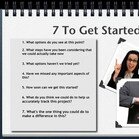 Build Competence Through Questions
Leaders do have to tell people exactly what to do when a person isn't yet competent--and confident--about the task or assignment. The whole "leader" thing isn't just about high-concept and vision). But how do you develop managers who are knowledgeable and committed? You can build increased confidence and deeper understanding by asking questions designed to help them make their own discoveries and decisions. Here are seven questions to get you started as a "coaching" leader: . As you become more comfortable with probing questions, you'll develop your own. Do you have any favorites now?
-
ALL THINGS WORKPLACE | MONDAY, JULY 13, 2015
 Five Hints You Should Make A Change
If you've ever wondered what executive coaches really do that adds great value, it's this: We create a relationship that enables our client to clearly see reality. . Life isn't a part of business; business is a part of life. So, everything of consequence leads to confronting and resolving some kind of issue that leads to a choice about personal change. All of the choices aren't always huge, but they are necessary in order to develop more healthy and effective patterns of work and leadership. What To Look For. Maybe one or more apply to you as well. Here Here are five that stand out for me: 1.
-
ALL THINGS WORKPLACE | MONDAY, JULY 6, 2015
 Three Persuasive Ideas
If I had eight hours to chop down a tree, I'd spend six sharpening my axe.--Abraham Abraham Lincoln. We never outgrow our need to be persuasive. Managers have to persuade employees to "get on board" with a new idea or change; salespeople get paid to persuade customers to buy; and potential customers persuade salespeople that a change in the "deal" just might make them a paying customer. We're all faced with the challenge of persuasion and influencing. Here are three ideas to help meet your next challenge: Create the Right Atmosphere. Get At The End of a Parade. Bask in it). Stand Up.
-
ALL THINGS WORKPLACE | MONDAY, JUNE 22, 2015
 Employee Engagement: Pay Attention to These
The notion of Employee Engagement has been with us for a while now. noticed in a meeting last week that everyone was passionate when we started discussing "engagement". But the longer we talked, the less I was convinced that we were talking about the same thing. In fact, we all had a personal, sensible, gut level idea of what it meant. But the "definition gap" emerged when we began talking about how to approach the issue. Predictable, actually. How Do You Define Employee Engagement? So they came up with a "blended" definition and some key themes that represented all of the studies.
-
ALL THINGS WORKPLACE | TUESDAY, JUNE 16, 2015
 Paying Attention To People
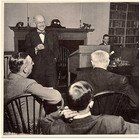
Last week I was discussing the Hawthorne Effect during a speech on performance. It led to a lively Q&A, so I thought I'd re-visit this post from December, 2009. The original experiment and its impact on management and human behavior are timeless. . In the 1920s, physiologist Elton Mayo conducted experiments at the Hawthorne Electrical Works in Chicago. He was trying to confirm his theory that better lighting led to greater productivity. So, he had the lights on the factory floor turned up. Voila! As he expected, production levels increased, too. Done deal? Production went up again.
-
ALL THINGS WORKPLACE | MONDAY, MAY 4, 2015
 Meetings: The First 15 Minutes Matter
Beginnings make a huge difference. . Meetings offer a perfect example. I was working with a VP who started off her 3-day, first quarter meeting with a 20 minute introduction. In that 20 minutes she crisply and energetically laid out: The purpose and expected outcome of the three days. Three highlights and three lowlights from the previous year. Why people were seated, by name card, at their six-person tables. There were actually two reasons): 1. It really beats spending an hour having new people introduce themselves, tell their histories, and then know nothing about the rest of the group.
-
ALL THINGS WORKPLACE | MONDAY, APRIL 27, 2015
 Learn How To Develop Others
"Developing Others" ranks dead last on just about every organizational skill level survey with which I've been involved or have read. . It's not because people lack awareness of its importance; quite the contrary. It's because development takes time. It involves getting to know people and their capabilities at more than a surface level. To develop people, you have to follow a few fundamental steps. Here's How To Begin. 1. Start with an accurate picture of the person's strengths and weaknesses. They can't grow if they don't have good information about themselves. Build a l earner mentality.
-
ALL THINGS WORKPLACE | TUESDAY, APRIL 14, 2015
 Handle Objections With Questions
You and I come up with some pretty wonderful ideas, which--for some strange reason--aren''t immediately embraced by those around us. So what''s our natural response? It''s usually to start making statements in defense of our position, which then leads to "I''m going to win!". Not a good posture. . . Ask Questions. When you keep announcing the righteousness of your position, the problem defines you. When you respond with a question, both of you begin defining the problem and looking for solutions. Which do you want? You get the idea. Give it a try
-
ALL THINGS WORKPLACE | MONDAY, MARCH 23, 2015
 5 Tips Leaders Can Use Today
One of the benefits of working with lots of leaders in many different organizations is the chance to see what really works, regardless of the individual personality or industry. . So, here are: 5 Tips That Make A Difference. 1. Leading starts with clarity. The time that a leader spends getting clear about what needs to be done will pay off in quickly-focused effort as a result of increased understanding. . When things aren''t clear, the day doesn''t go well. Minds and bodies gravitate toward something that does seem clear. The world abhors a vacuum. When Your employees are thinking it. 3.
-
ALL THINGS WORKPLACE | TUESDAY, MARCH 17, 2015
 How Culture Impacts Perception
Re-published by request. Clear-thinking people everywhere acknowledge that it''s easy for two people to see the same situation very differently. . In a world where we increasingly work across time zones and cultures, this would have even greater meaning if perceptions were influenced by one''s culture. While those of us who work globally may have experienced--and thought about-- the inherent reality of these perceptive differences, Canadian and Japanese researchers have confirmed some very specific distinctions. When East Doesn''t Meet West. The outcome? Communication Relationships
-
ALL THINGS WORKPLACE | TUESDAY, MARCH 10, 2015
 Leaders Connect Visually
Influential people create compelling images. But of what ? Of the benefits those around them will gain from the ideas they propose. They take time to let us know what we''ll see, hear, and feel. You can do this, too. Take time to choose words that create pictures, sounds, and feelings that will make your ideas connect in different ways all at once. For example: "Using this plan offers clear benefits that are in total harmony with our goals and will have an impact on customer satisfaction." In one sentence, you''ve touched the visual, auditory, and feeling senses of your listeners.
-
ALL THINGS WORKPLACE | MONDAY, MARCH 2, 2015
 Consistency and Trust
"Who you are speaks so loudly I can''t hear what you say.". That line was spoken by an associate to a speaker at a recent business business event we attended. The interaction between the speaker and the audience was totally out of sync with what he was professing. The result: Great words, no credibility. A few attendees even referred to him later as a "liar.". Not good for his business. Consistency. We communicate through our actions, not just our words. Every instance of consistency builds credibility; a single instance of inconsistency can begin to build doubt about your trustworthiness. .
-
ALL THINGS WORKPLACE | MONDAY, FEBRUARY 23, 2015
 Coaching Your People?: Manage Risks
We all want to stretch the capabilities of our team members. At the same time, think about minimizing failure when someone has a "stretch" goal with high risk attached. Any high risk goal can damage your reputation, your staff member, and even the organization. . Manage risks by discussing the actions your person plans to implement. Then, monitor the results and agree on frequent reviews to catch anything that needs adjusting before things get "off track." Stretch goals are great confidence builders for everyone involved; they also require more follow up conversations than low risk goals. .
-
ALL THINGS WORKPLACE | MONDAY, FEBRUARY 16, 2015
 How to Boost Excitement About Creativity
This Post appeared earlier and was requested by a long-time subscriber. . You want to be creative and breed creativity in your workplace, right? Do you consider yourself to be "creative?". I was just talking with my cousin, Len, a long-time public school teacher and Principal. Len Len is also a master coach He noted that if you ask first-graders how many of them are "creative," pretty much all of the hands in the class go up. They smile. They show their colorful drawings and finger painting and maybe even compose a song along the way. The responses drop to nearly zero. Well, a little one).
-
ALL THINGS WORKPLACE | THURSDAY, FEBRUARY 12, 2015
 How To Measure Relationships
“It’s only words, and words are all I have, to take your heart away.” --Maurice, Robin, & Barry Gibb, The Bee Gees: “Words”. Listen to the Lyrics Do you want to know a way to check the depth of how someone is relating to you at a given moment? Just listen and check out their language. You’ll be fascinated at how revealing it will be. Here’s what I mean: When people operate at a surface level, they often share catch-phrases or clichés: “Well, the new design isn’t moving along too fast. Move a step deeper and folks will offer some facts: “I want to improve the quality by 10%.”
-
ALL THINGS WORKPLACE | MONDAY, JANUARY 26, 2015
 Four Ways You Can Impact Learning
More and more, job candidates are asking the question, "What will I learn here?". If they don''t like the answer they may keep looking. For leaders, managers, and heads of projects, helping people learn is a critical contribution to individual and organizational success. So, here are Four Ways to Impact Learning that will serve you well. . Impact on Curiosity : For every action there''s a reaction. When we say or do something, people want time to react to it, talk about it, and understand what it means to them. Practical Application: Allow time for questions and answers.
-
ALL THINGS WORKPLACE | THURSDAY, JANUARY 15, 2015
 360 Feedback: All About the Conversations That Follow
Finding out "how we''re doing" is an important part of life, on and off the job. 360 degree feedback tools can be especially helpful when you want to know how you are doing in relation to your boss, your direct reports, and peers in the organization. like 360''s because they: 1. Let you see how others believe you are doing in specific areas that are important to on-the-job success. 2. Provide a quick look at how each of your constituencies is experiencing you. So you know where to keep doing what you are doing now, and where to make some changes. That helps you prioritize things. 3. Why not?
-
ALL THINGS WORKPLACE | MONDAY, JANUARY 5, 2015
 Your Next "Aha!" Is the Beginning, Not the End
(Re-issued by request). How many times have you studied, thought, worked, conversed, or meditated in order to reach an "Aha!" moment? It seems to me that we have a tendency to treat "Ahas!" as if they are a result. Yet when you look at them carefully, they signal a beginning ; a sign that there may be a new path to pursue, something new to learn, or a situation to re-visit in a different way. In fact, I received that "Aha!" in a conversation with no less than the Conversation Agent herself, Valeria Maltoni. into the conversation. It was a beginning that led to today''s post. Some Aha! Sorry.
-
ALL THINGS WORKPLACE | WEDNESDAY, DECEMBER 31, 2014
 Managing a Change? Here's A Solid Solution
Is everyone getting what''s needed when you make changes? Earlier this month I was working with a manager who had gotten some feedback from his boss. He was told that he didn''t jump in alongside his people to get new projects and improvements off the ground. As a result, things weren''t getting done on schedule. So I asked him why he managed from a distance. His response: "My people are long time employees. They''re highly educated and have a lot of experience. If I start managing too closely, they''ll lose their motivation.". I''m thinking,"What motivation? What do we look for? Direction.
-
ALL THINGS WORKPLACE | MONDAY, DECEMBER 22, 2014
 "Who Do You Want to Become?" vs. "What Do You Want To Be?"
Which question are you asking yourself? Your choice will help determine the depth of your life as well as the comfort-level of your career. . I''ve been watching a new CEO client begin his tenure at a global company. He is very comfortable listening, talking, giving direction, and saying "I don''t know. That sounds good to me. Go ahead and do it." Whatever the "it" is). What I''m really seeing is a man who has, over a lifetime, decided to "become" the kind of person he wanted to be. know for a fact that he didn''t set out to be a CEO. In fact, he was invited into the role.
-
ALL THINGS WORKPLACE | MONDAY, DECEMBER 15, 2014
 Presentation Success Tip: How To Help People Follow You
Create Transitions. . "We''ll be back after this message from." There''s a reason why TV and radio announcers use that line. It''s designed to help you understand what''s about to happen and how it''s connected to the programming. In broadcasting it''s called a "segue.". How often have you watched a speaker end a sentence, click the next slide, speak, click the next slide, speak, click the next slide. and you''re wondering "How is this related to what I just saw?" That''s what happens when presenters see their role as giving out information instead of telling a meaningful story. Click.
-
ALL THINGS WORKPLACE | MONDAY, DECEMBER 8, 2014
 Why Should You Want to Work There?
An international survey of more than 500 HR executives by global talent management firm Bernard Hodes (now part of Findly ) has found that the quality or reputation of products and services, the corporate culture and the work environment are a business''s most important attributes when it comes to bringing talent on board. Ethical reputation also scored highly. But benefits and compensation were, perhaps surprisingly, toward the bottom of the list. What does it tell us? Discerning to the point that companies are getting professional help to create a "brand" for recruiting. Career Fairs.
-
ALL THINGS WORKPLACE | WEDNESDAY, DECEMBER 3, 2014
 Do You Know Your Conversation Catalysts?
Do you want to spread your message for a product, service, or maybe an important organizational change? Here''s a question to answer: "Who are your Conversation Catalysts?". My friend Valeria Maltoni , conversation and connection gurette, wrote about a Keller Fay Group research finding that showed 15% of the population to be Conversation Catalyst s. . These influencers tend to recommend brands and products more often at the tune of 149 times a week vs. 79 for the average population. They also tend to have more conversations -- 184 vs. 114 -- and talk more about brands than others.".
-
ALL THINGS WORKPLACE | MONDAY, NOVEMBER 24, 2014
 Inclined to Collaborate? You Should Be
"Collaboration is a key driver of overall performance of companies around the world. Its impact is twice as significant as a company’s aggressiveness in pursuing new market opportunities (strategic orientation) and five times as significant as the external market environment (market turbulence).". As a general rule, global companies that collaborate better, perform better. Those that collaborate less, do not perform as well. It’s just that simple.”. That is a pretty powerful claim. Do You Play Well With Others? Yet it ultimately comes down to the individual. What happened? He never built them.
-
ALL THINGS WORKPLACE | MONDAY, NOVEMBER 17, 2014
 Really: How Many Choices Do You Want?
The rallying cry of sales reps, product managers and politicians is "Choices! We offer choices!". My observation? . We really don’t like having too many choices. It makes us a little nervous. Every option leads to a chance to foul something up. Heck, a lot of people are more worried about not being wrong than about being right. So, we allow our experiences and habits to narrow our options to just a couple of familiar ones. It reduces the anxiety and relieves stress. So, how do you make genuine changes faced with the siren song of habits? More Good Options Than You Think! Really. So what?
-
ALL THINGS WORKPLACE | MONDAY, NOVEMBER 10, 2014
 Four Ways Leaders Can Impact Learning
Leaders, managers, and heads of projects constantly seek ways to grow talent and make a difference in organizational success. More and more, job candidates are asking the question, "What will I learn here?" If they don''t like the answer, chances are they''ll keep looking. So, I began reflecting on some recent speaking and workshop experiences. Four distinct factors came to mind as I thought about the give-and-take that led to learning for all of us. hope you''ll find these useful. . Four Ways to Impact Learning. Impact Curiosity: For every action there''s a reaction. You know the content.
-
ALL THINGS WORKPLACE | MONDAY, NOVEMBER 3, 2014
 What Happens When Leaders Coach?
You may already have the right people to enable your company to "win"--however you define the word. couple of years ago I was involved in designing a leadership program to develop the top talent in a global company. We created a model that used the senior management team as coaches for the structured learning activities. First we coached the coaches on how to coach; then we turned them loose. It''s been the most effective learning we''ve experienced in nearly 30 years of leadership development and design. What''s happening that works? The top leadership learns a lot about their own abilities.
-
ALL THINGS WORKPLACE | MONDAY, OCTOBER 27, 2014
 What Is In Your Unspoken Contract?
When 300 technical professionals at a major utility were told to re-apply for jobs in their department as part of a major reorganization, they were livid. "I''ve been here 18 years." (Longevity means immunity to change). "I hired the idiot who''s running this thing." (If I gave someone their job, they won''t mess with mine). Danger: The "Invisible Assumed". When you signed on with your current employer you probably discussed: Salary, benefits, corporate vision, the marketplace, performance expectations. It''s the ones you assumed to be true that will come back to haunt you. Employees: 1.





Let's personalize your content